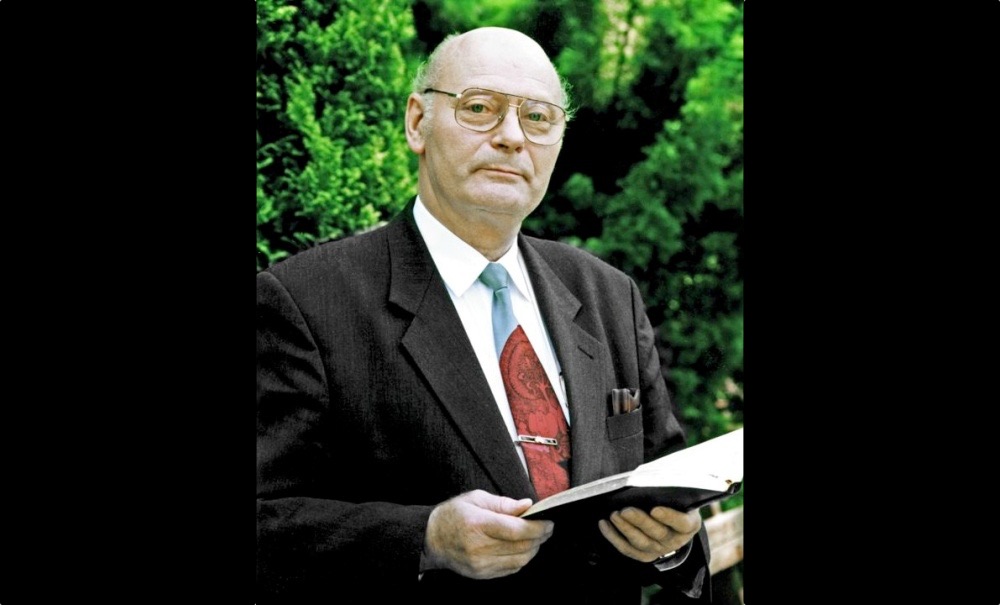
1990-07-14 - 19:30 - Annaberg - ENGLISH
Ewald Frank
preached on 14. 07. 1990, 19:30, Annaberg,
Topic: “Our faith must be anchored in the promises of God!”
broadcast on 9. 5. 2026
We continue with our reflection on the Word, and time and again it is the same thought that moves me, namely that true faith must and can only be anchored in God’s promises. There is no way for biblical faith to exist in a vacuum. Faith must always have a point of reference. One must know what it is all about. One must know what God has promised, and then faith becomes anchored, becoming a revelation of God’s will in the promises that God has given us. We shall return to this thought later.
Perhaps that sentence was a little long-winded, but it is truly so. True faith must be rooted somewhere. Faith must have this point of reference. It cannot merely assume or imagine. It must have a point to which it can cast its anchor. And this faith is then, as our Lord said, the faith according to Scripture. He said, “whoever believes in me as the Scripture says, out of his belly shall flow rivers of living water.” [Joh 7:38]
A faith that is outside Scripture, outside the promises, is a dead faith that cannot and will not bring about divine works.
It is therefore absolutely essential that we take to heart what the apostle Jude wrote, “contend for the faith which was once for all delivered to the saints.” [Jud 1:3]
Brother Branham once put it this way, that this biblical faith is the lifeline between God and the person who has become a believer.
This lifeline from which fresh divine power of faith flows to us time and again.
And I believe that in such uncertain times as we are now living in, it is indeed necessary to find the bedrock of the Word, to be built upon it, and to have absolute certainty, not within oneself, but from the testimony of Scripture, that one is indeed standing on biblical ground. There have been deceptions and disappointments in the past, and there will be more to come, but may the Lord God indeed preserve us from them.
We read of Abraham, that “he believed God” [Gen 15:6, Rom 4:3], and of many others who experienced great things with God.
And how did this come about? Simply because these people believed the promises that God had given them. And that is why they came through in their lives. And they themselves were a living testimony to the living presence of God in their time.
As we reflect on the Word here this evening, we do so with the understanding that God has a plan of salvation for humanity. Perhaps we could even choose the theme: God’s plan for humanity. And then we will see that he has given the promises and will also fulfill them. And as I said before, this living faith is anchored in God’s promises.
I would like to begin with a reflection on the Word straight away and read from Joshua chapter 21, verse 45. Joshua 21 verse 45:
[45] Of all the promises that the Lord had given to the house of Israel, not a single one had remained unfulfilled; they had all come to pass.
Amen. That is truly powerful. There’s no other way to put it. If we were now to add up the total number of promises that God has given and fulfilled, great gratitude would well up in our hearts and we would immediately be able to draw the connection: If God fulfilled all the promises to Israel as his Old Testament covenant people, how much more will he fulfill all the promises he has given to the people of the New Covenant?
Can we say amen to that? Scripture cannot be broken under any circumstances, and God stands by his Word.
Shall I read it again?
“Of all the promises which the Lord had given to the house of Israel, not one remained unfulfilled.” [Jos 21:45]
Amen. Not a single one. Not a single one remained unfulfilled. “All had come to pass.”
Thus our God is faithful and true in all his deeds.
People can make promises, give assurances and mean well, yet be unable to fulfill and carry them out. God is able under all circumstances, whatever may come, to do and fulfill what he has promised.
From Nehemiah chapter 9, I would like to read the last part of verse 8:
“… to give this land, I say, to his seed; and thou hast performed thy words; for thou art righteous.” [Neh 9:8]
It is a longer passage that one should have read for the sake of context. Regarding the second part of verse 5. The man of God says here, “Stand up and bless the Lord your God forever and ever: and blessed be thy glorious name, which is exalted above all blessing and praise. Thou, even thou, art Lord alone; thou hast made heaven, the heaven of heavens, with all their host” [Neh 9:5-6] and so on and so forth.
What was important to me here was this final part of verse 8:
“And you have kept your word, for you are righteous” [Neh 9:8].
Blessed be the name of the Lord. The creator of heaven and earth, the creator of the universe, of the cosmos. He keeps his Word to the children of men. There is a passage in the New Testament that tells us, “even if we are unfaithful, God remains faithful, for he cannot deny himself.” [2 Ti 2:13]
He cannot break his own Word. He must stand by it. If we know that “all God’s promises are a yes and amen” [2 Co 1:20], and that God fulfills them when the time comes, then our faith may truly rest in this.
I would like to read the relevant scriptures, namely from 2 Corinthians chapter 1 and then a few more from other parts of the Bible. 2 Corinthians chapter 1, which we are all surely familiar with, verse 20:
[20] For all the promises of God in him are yea, and in him Amen, unto the glory of God by us.
This Word is also very important. Without us, there can be no completion of the church. God needs his people. God needs the church to fulfill in the church and through the church the promises he has given to the church, just as he needs Israel to fulfill the promises he has given to Israel. All in its own time, in the right context as God has determined and established in his Word and in his plan.
So let us take it from the Lord’s own mouth as it is written here and let it sink deep into our hearts and take root there: “for all the promises of God”, not just two or three, “for all the promises of God”.
Can you say amen to that?
Thus it is written here, “for all the promises of God”, whether salvation, healing, transformation, the rapture, whatever it may be that God has promised.
“For all the promises of God in him are yes.” [2 Co 1:20]
In Christ, God has said yes. Did you understand that? In Christ, God has said yes to the plan of salvation which he wishes to fulfill. In him he has said amen, the will, the fulfillment, the beginning and the end, the first and the last. If we can take this into our hearts, then our faith rests in God.
Then we enter into that rest which is available to the people of God [Heb 4:9].
Not to fall asleep spiritually, no, certainly not that, but also not to be plagued by restlessness, but to truly rest in God.
“For all the promises of God in him are yea, and in him Amen.” [2 Co 1:20]
If one looks up the word Amen, it says, “so be it” and “so it is”. The word Amen means, “so be it”. God has given the yes, God has given the Amen. Just as God has ordained it in Christ, so it is. Amen. It cannot be otherwise. There is no power in the universe that could resist God. There are many who speak of Satan’s power. I am not one of them. I’m not interested in Satan’s power at all. I’m interested in the omnipotence of God. And Satan has only as much power as we grant him in our thoughts. If anyone wishes to praise him and speaks much of his power and of all his deeds and abilities, then he will certainly feel at home there and cause even greater harm. I have no time for people who concern themselves with the devil.
I only have time for those who do as the Lord did and say, “Satan, get thee behind me.” [Mat 16:23]
If you engage in a conversation with him in your mind, then I will tell you today who will come off worse. Why at all?
There was one confrontation with Satan, and it was waged by Jesus Christ, our Lord.
You remember the Old Testament, David, when the battle lines of the Philistines and Israel faced each other, it was said, “Choose one from among you to lead the battle. And whoever is defeated, their people will then serve the other.” [1 Sa 17:8-9]
Everyone was fearful and anxious. And then came David, who wanted to look after his brothers.
And lo and behold, something came over him and he said, “By what right does this uncircumcised Philistine blaspheme the army of God?” [1 Sa 17:26]
And he took his sling, along with five stones, and one was enough. I’ve said it often enough: no matter which way David had released the sling’s cord, the stone would have struck exactly where it belonged, because God was in it. I don’t believe he stood there hesitating, thinking, “goodness, will I hit the mark or won’t I?” With God, it’s always a direct hit. We can rely on that. But now we come to the Son of David. What about him? Jesus Christ, the Son of David, faced Satan’s challenge. He wrestled and fought in Gethsemane.
He conquered death, he overcame hell, he rose again on the third day. Who is to serve whom now? Surely not we serving Satan’s army. That is why Jesus said, “I give unto you power to tread on serpents and scorpions, and over all the power of the enemy: and nothing shall by any means hurt you.” [Luk 10:19]
Why not? Because God’s victory through Jesus Christ on the cross of Calvary took place once and for all.
And now to the Word from 1 John 5: “faith is the victory that has overcome the world.” [1 Jo 5:4]
Unbelief dishonors God, sees the problems, the hardships and all that may be. Faith sees something quite different. It sees the victory that was achieved on Golgotha. It takes God at his Word, allowing its faith to be anchored in that victorious cry from Golgotha: “It is finished.” [Joh 19:30]
In this finished work of redemption, accomplished once and for all, rests this faith, which is the victory that has overcome the world.
Once again this verse here from 2 Corinthians 1:20:
“For all the promises of God in him are yea, and in him Amen, unto the glory of God by us.” [2 Co 1:20]
The Word is fulfilled through the believers, as the promises the Lord has given become reality.
I would like to read from Romans chapter 1, verse 2. You can read the relevant scriptures a little later on. Romans chapter 1, perhaps right from the start:
[1] Paul, a servant of Jesus Christ, called to be an apostle, separated unto the gospel of God,
[2] (Which he had promised afore by his prophets in the holy scriptures)
Please take note of this word “promised” or “promise”. That is what matters in this reflection. Here we are speaking of the Gospel, of the message of salvation which God promised beforehand in the holy scriptures through his prophets.
Did you know that everything that happens in the New Testament was promised in the Old Testament and is now becoming a reality? Did you know that John the Baptist was a promised prophet, just as Jesus Christ was the promised Savior and Messiah?
We can read about every promise concerning our Lord from the first to the last. The first, as everyone knows, in Genesis 3:15, where “this seed would come through the woman and crush the serpent’s head.” [Gen 3:15]
You are all familiar with the old scriptures, right up to the final promise in Malachi chapter 3, verse 1: “Suddenly the Lord will come to his temple, whom you desire.” [Mal 3:1]
What was it? All the promises that God had given. And if Dr. Larkin counted correctly, there were 109 Old Testament prophecies that were fulfilled in the New Testament at the first coming of Christ.
That’s a staggering number. Not just two or three. Everything was promised. And if I had the time, I would certainly find them all. That wouldn’t be a problem at all.
What is more important for us is that we do not merely speak of the past, but are brought up to date in the kingdom of God, receiving spiritual guidance so that we know: What has God promised? What is to happen now? What is the sequence and placing according to Bible prophecy?
That is very important. Anyone can preach a sermon that bypasses God.
God is now seeking people who do not merely speak of him. God is seeking people through whom he can speak. People who do not merely recount his works, but through whom he can work.
People with whom he can make history in the plan of salvation. People on whom he can also rely.
So we have understood Romans 1, verse 2: “God had promised in advance through the prophets in the Holy Scriptures what would happen.” [Rom 1:2]
And I would like to emphasize this directly. Everything had been foretold from the birth to the ascension of Jesus Christ.
In Micah 5 it is written that he would be born in Bethlehem and what is it?
Psalm 69 probably, verse such and such, that he would ascend into heaven. Everything, his suffering, his ministry, his death, his resurrection. “I will not suffer my Holy One to see corruption, nor will I leave his soul in hell.” [Psa 16:10]
Peter quoted this Scripture in his first sermon on the day of Pentecost. Everything was written of our Lord.
And if I may, this passage from 1 Corinthians chapter 15 comes straight to my heart. It is really a matter, dear friends, dear brothers and sisters, it is about our faith in God and God’s Word being so founded, strengthened, and built up that it can no longer be shaken, that we have been founded on this unshakable foundation of God, which is indeed the Word, so that when the storms rage, they strike the rock upon which the house of our faith has been built and that nothing is brought down by storm or waves.
1 Corinthians 15, verse 3:
[3] For I delivered unto you first of all that which I also received: how that Christ died for our sins according to the scriptures;
[4] And that he was buried, and that he rose again the third day according to the scriptures.
Amen.
For me, that means everything. I don’t know if you understand me on this, but is there anything more certain than God’s Word? God’s Word is yes and amen. “Heaven and earth will pass away, but God’s Word will never pass away.” [Mat 24:35]
And if David prophesied, as I just quoted: “My Holy One shall not see corruption” [Psa 16:10], then Christ had to be raised before three days were completed, on the third day, for after three days, corruption sets in.
You can ask any doctor about that. And then there are people who take offense at the fact that he was not down there for a full three days and a full three nights. We have nothing to take offense at. We must have respect for God and God’s Word and leave everything else to God. Let those who approach these things with their intellect take offense, and not we who treat God’s Word with faith.
I would like to read from Galatians 4 and then again from chapter 3. It’s a very important word here. All of them are important, but this one is relevant to our topic. Galatians chapter 4, verse 28:
[28] Now we, brethren, as Isaac was, are the children of promise.
What a word. Have we ever considered the implications, the significance, of such a statement?
[28] Now we, brethren, as Isaac was, are the children of promise.
Abraham did indeed have many sons and daughters, not only with Hagar; he later married Keturah and had sons and daughters with her. All of this can be read in the Scriptures. But he had only one son who was given to him by divine promise, and that was Isaac. All the others were born after the will of the flesh. Isaac was a son of promise. And the Lord said to Abraham, “At this time next year I will return to you, and then you will have your son.” [Gen 18:10]
Herein lies the great difference, and I want us all to understand it. Among God’s children, there are these two groups. There are those who become believers in a general sense, who experience conversion, but who do not care about the promises God has given, and some of them even reject them. But then there is also the group that is genuinely interested in knowing and receiving the words of promise.
I will show you three things from the Word of God. There is the Word of promise, there is the Spirit of promise, and there are the children of promise. The children of promise accept the Word of promise and are sealed by the Spirit, with the Spirit of promise, on the basis of the accepted Word of promise.
This is what applies to the firstfruits. At the last judgment, many will indeed be saved, who will be part of the second resurrection, according to Revelation 20 from verse 11. But we are not speaking here today of a second resurrection, nor of the possibility of being rescued from the fire like a brand [Zech 3:2] and being saved by the skin of our teeth [Job 19:20]. We are speaking today, I believe, to one another, and specifically to people who will be present at the first resurrection, at the rapture, at the marriage supper, in the millennium, to people who do not wish to be left behind, but who also want to receive all that God has prepared. I hope at least that we are among them.
So look, here is the point.
[28] Now we, brethren, as Isaac was, are the children of promise. [Gal 4:28]
When the time came for Abraham to distribute his estate, do you know what he did? He gave gifts to all the other sons, but he gave the estate to Isaac. Isaac was the rightful heir by virtue of the promise. Today, throughout the entire charismatic movement, we have so many people whom God has blessed with spiritual gifts that one could almost become envious. But the inheritance goes to the elect, to those who were called into being by virtue of the promise and who therefore believe in all of God’s promises with all their hearts. I know that some points, particularly those of a doctrinal nature, need to be discussed a little more to bring clarity. Nevertheless, I trust God that he will open the understanding of all who are sincere. So when it comes to the inheritance, it is written that “we are heirs of God, and joint-heirs with Christ.” [Rom 8:17]
Then it is written, “How shall God not with him also freely give us all things?” [Rom 8:32]
So this is not merely a matter of being bestowed with a few gifts here. It is about much more: “the inheritance that is kept for us in heaven” [1Pe 1:4], as it is written.
I would like to read on from Galatians chapter 3. Galatians chapter 3, verse 8, and then verse 14.
Galatians 3, verse 8:
[8] And the scripture, foreseeing that God would justify the heathen through faith, preached before the gospel unto Abraham, saying, In thee shall all nations be blessed.
Here we have not just the term “promise”, but “promise of salvation”. A promise linked to the salvation that God has given us. And there is in no other salvation, and there is no other name given to mankind under heaven by which we can be saved, than the name of Jesus. [Act 4:12]
Here it says: “But the scripture foresaw that God would justify the nations, that is the Gentiles, by faith” - for they had no works to present to God - “that God would justify the nations through faith, he proclaimed the promise of salvation to Abraham in advance: In thee shall all nations be blessed.”
Praise be to the name of the Lord. I could read out half a dozen passages to you off the top of my head, particularly from the prophet Isaiah, where it was already announced in the Old Testament that “all the ends of the earth would see God’s salvation” [Isa 52:10] and “that the Lord would be salvation to the ends of the earth.” [Isa 49:6]
I shall read one to you from Isaiah chapter 49, just so that this point is clear. God had already decided in his plan of salvation that the Gentile nations too would share in his salvation, not just the people of Israel.
Isaiah 49, verse 6:
[6] And he said, It is a light thing that thou shouldest be my servant to raise up the tribes of Jacob, and to restore the preserved of Israel: I will also give thee for a light to the Gentiles, that thou mayest be my salvation unto the end of the earth.
A promise of salvation, have you noticed? A promise. We have read that “all the promises of God in Christ are yea and amen.” [2Co 1:20]
Coming back here to this Word from Galatians 3, or consider Hosea: “You who are not my people will be called sons of the living God.” [Hos 1:10]
“I have been found by those who did not seek me.” [Rom 10:20]
Yes, one could list a large number of Scriptures here. Let us come back here to this word, Galatians 3, verse 8: “And the scripture foreseeing…”
Who foresaw it? It was God who foresaw it and had it recorded in Scripture so that we might have a firm foundation and know in advance what God has promised.
In the same chapter, we then read verse 14:
[14] That the blessing of Abraham might come on the Gentiles through Jesus Christ; that we might receive the promise of the Spirit through faith.
Now we have a second term. Previously it was the promise of salvation, now we have the promise of the Spirit, which we might receive through faith. After all, everything is encompassed and included in what God intended for his church or what he intended for Israel. And as we read earlier, “not one of his promises has failed, and not one will fail.” [Jos 23:14]
I shall now read verse 29 from Galatians 3:
[29] And if ye be Christ’s, then are ye Abraham’s seed, and heirs according to the promise.
I turn to Romans chapter 4. Romans chapter 4. It simply must come to pass that the church of the living God can anchor its faith, if it is alive, in the promises contained in the Word which has been made alive and revealed to us in this age. For look: first the Word was spoken through inspiration, then it was written down, and many came who formed their own ideas about God’s Word. But now God has put an end to the time of such ideas and no longer permits human interpretations of his Word to be presented to his people, but rather that his Word in its original form as the living spoken Word be made accessible to his people anew without interpretation. We let God speak for himself; he has done it and he still does it today, and he does it through his precious and holy Word.
Galatians 4, you would have to read a lot here. You may read the whole chapter. I would like to begin with verse 13:
[13] For the promise, that he should be the heir of the world, was not to Abraham, or to his seed, through the law, but through the righteousness of faith.
[14] For if they which are of the law be heirs, faith is made void, and the promise made of none effect
And that simply cannot be. A promise cannot become either one or the other. People can set it aside for themselves, but not in its entirety. If, for example, the Lord calls a person and he does not come, then he calls the next person and he comes. But God’s assurance and God’s promise remain in force. It all depends on whether we accept it or whether we do not accept it.
I shall read on, verse 15:
[15] Because the law worketh wrath: for where no law is, there is no transgression.
[16] Therefore it is of faith, that it might be by grace; to the end the promise might be sure to all the seed; not to that only which is of the law, but to that also which is of the faith of Abraham; who is the father of us all.
Amen. If anyone claims credit for themselves on the basis of works of the law, where then is the promise and where is the glory that would be due to the Lord? Everything in Holy Scripture is simply so marvelous, so precise, so clearly arranged. There is no subject that a person today would still need to organize in any way, perhaps finding the relevant Scriptures and placing them in the right context. For the letters were after all written to many churches at different times and sent to various cities. And so the things that were written back then have been compiled into a single book, the New Testament, and here we have the complete overview. Our task is to take what Paul wrote to the Romans, what he wrote to the Corinthians, Galatians, what he wrote into a coherent whole and thus to give and grant the people of God an insight into the whole plan of salvation of our God. Certainly it sounds presumptuous if anyone were to say that they are proclaiming the counsel of God. Yes, if we do not proclaim the counsel of God, what then are we to proclaim? And if Paul said back then in Acts 20, verse 25 and 26: “I have proclaimed to you the whole counsel of God” [Act 20:27], what are we to do today?
Are we to pass on human opinions? That is not possible. We are here to proclaim the full Gospel now, and the full Gospel includes instruction, rebuke, the entire prophetic part of the Word of God; it all belongs to it. And if something is missing from that, then it is not the full Gospel. And therefore it is essential that people do not get the impression when the Gospel is preached and much is said about healing, in which we believe - and I hope and also believe that we will see it and experience it for ourselves. I have seen and witnessed this to some extent in Brother Branham’s ministry, that people who had been born blind have regained their sight in a single moment. I have seen this with my own eyes. I have seen how cripples, for example, a professor who was brought in on a stretcher by the Red Cross and for whom there was truly no hope, this man was skin and bones in his advanced age. And when Brother Branham was shown by the Lord that this man lying there on that stretcher would be healed, he called out to him: “Get up, take your bed and go home.”
And so it happened.
Over 15,000 people saw it.
I have already seen the restoration in a ministry that has been given to us as an example, namely a restoration of what was in the early church. I have already had a foretaste of the matter. Now, and we shall prove this from Scripture, though I doubt whether everything can be said today, but I give you the reference, Acts chapter 3 from verse 19. Perhaps I shall read it after all, so that we may know that before the return of Jesus Christ the church must be restored to its original state. Christ cannot return before that.
Acts chapter 3.
Here it speaks again of the fulfillment and so on, but I shall read from verse 19:
[19] Repent ye therefore, and be converted, that your sins may be blotted out, when the times of refreshing shall come from the presence of the Lord;
[20] and he shall send Jesus Christ, which before was preached unto you:
And listen what it says now:
[21] Whom the heaven must receive until the times of restitution of all things, which God hath spoken by the mouth of all his holy prophets since the world began.
That is plain language. It needs no further interpretation. It only needs people who believe it and look forward to seeing its fulfillment.
God intends to restore all things before the Lord Jesus can return to bring the church home. For a church must emerge without spot or wrinkle [Eph 5:27], united with the Bridegroom through Word and Spirit, one with Him, until the Spirit and the Bride say the same thing, namely, “Come, Lord Jesus.” “For the Spirit and the Bride say, Come.” [Rev 22:17, 20]
At the very end, the Bride and the Spirit, the Spirit and the Bride, must say the same thing. That is to say, the Spirit must be able to speak again through the Bride; the Spirit must be able to work anew. But that is not our topic today. Rather, it is a promise that God will restore all things. And indeed, Jesus remains in glory until the times of the restoration of all that God has promised. [Act 3:21]
Let us return to Romans chapter 4, where it says it is a gift of grace and bound to the promise.
Now, verse 17:
[17] (As it is written, I have made thee a father of many nations,) before him whom he believed, even God, who quickeneth the dead, and calleth those things which be not as though they were.
God gave Abraham the promise: “In Isaac shall thy seed be called.” [Gen 21:12]
Because Isaac was the son of the promise. And then you can read in Genesis 22, where the Lord said, “Take your only son whom you love and offer him up on the mountain which I shall show you.” [Gen 22:2]
And Abraham does not consult with flesh and blood, but sets out on his way, loading the wood unto Isaac. Just as Christ later a bore the cross, so Isaac bore the wood that was used for the altar, and then was laid upon the altar. For a moment it looked like as though God intended to force Abraham to render the promise impossible. Namely, in Isaac all should be blessed, and now Isaac is to be offered as a sacrifice upon the altar. And Abraham is already drawing the knife to bring it down. And then the voice of the Lord comes out of the blue: “Abraham, Abraham!” [Gen 22:11]
You all know this story, of course. And here we read that Abraham stood before God, that he believed that even if he sacrificed Isaac and he died, God would raise him from the dead and he would return with him. Shall I read it out now? For he said to the servants: “Stay here, my son and I are going to worship and then we will come back.” [Gen 22:5]
He did not say, “then I will come back.” “Then we will come back.” That was faith, living faith in the living God who can raise the dead.
You can read about it in Hebrews chapter 11. I am not sure if I can always find all these Scriptures straight away, but it is indeed written here, Hebrews chapter 11. The word “promise” again, Hebrews chapter 11, verses 17 to 19.
[17] By faith Abraham, when he was tried, offered up Isaac: and he that had received the promises offered up his only begotten son,
[18] Of whom it was said, That in Isaac shall thy seed be called:
And now comes verse 19:
[19] Accounting that God was able to raise him up, even from the dead; from whence also he received him in a figure.
What a wonderful testimony. There were men of God on earth, men who were in fellowship with the Most High, men who experienced God, who had encountered God, who heard His voice, and who saw His form. God is Spirit; no one has seen Him as Spirit. Even when the Spirit descended upon Christ, He came down in the form of a dove. But God, who is invisible and omnipresent and is Spirit by nature. John 4:24: “God is Spirit and those who worship him must worship him in Spirit and in truth.”
But we know that the Lord is the revelation of the invisible God. Yahweh was Elohim in visible form, just as Jesus was Emmanuel. And the Yahweh of the Old Testament, the I AM, is the same one who came in the flesh and was then among us, laid down His life, and rose again. How often did He say “I am”? Have you ever counted how often in the Gospel of John alone the phrase, the expression “I am” is written? “I am the way, I am the truth, I am the life, I am the resurrection, I am the light, I am the salt of the earth.” [Joh 14:6, Joh 11:25, Joh 8:12, Mat 5:13]
Always the I AM; this title belongs to the Lord alone and to no one else.
Let us read on, for that is not our topic today. In Romans chapter 9, the focus is on the promises in which our faith is to be anchored. Romans chapter 9, here we shall read only verse 4. Romans 9, verse 4:
[4] Who are Israelites; to whom pertaineth the adoption, and the glory, and the covenants, and the giving of the law, and the service of God, and the promises.
It was Israel as God’s covenant people to whom the promises were given. That is why God is referred to over 6,000 times in the Bible as the God of Israel. He chose the people of Israel through Abraham, Isaac, and Jacob. They remain His chosen people to this day, and blessed is the man who can bless Israel from the heart.
Let us continue reading in Romans 9, from verse 6.
[6] Not as though the word of God hath taken none effect. For they are not all Israel, which are of Israel:
[7] Neither, because they are the seed of Abraham, are they all children: but, In Isaac shall thy seed be called.
And listen to what is written in verse 8.
[8] That is, They which are the children of the flesh, these are not the children of God: but the children of the promise…
Amen. But the children of the promise, just as in the Epistle to the Galatians, so here in the Epistle to the Romans, Paul makes this quite clear and shows us what it’s all about.
I have a Word of the Lord to share with you. It is written in Luke chapter 1, so that you may recognize beyond all doubt how God’s ways are with His people. The word of promise was spoken to Mary and she believed it. Luke chapter 1, verse 45.
[45] And blessed is she that believed: for there shall be a performance of those things which were told her from the Lord.
Beloved, please tell me, and if you wish, in lectures I’m used to saying “ladies and gentlemen”; but today I’m assuming that we are believers, that we belong to the Lord.
Tell me, how did the New Testament begin? I hinted at it earlier; John was a promised prophet. In Isaiah 40, verse 3, it is still written today; shall I read it to you? “A voice cries in the wilderness, prepare the way for the Lord, make straight a highway for our God.” [Isa 40:3]
This Word had been written for over 800 years. In Malachi 3, verse 1, it is still written today: “Behold, I will send my messenger before me.” [Mal 3:1]
It was the Word of God, but when the time of fulfillment came, the Word became reality and the man stood on two feet, the promise had become reality, the voice was heard, the way was prepared for the Lord.
What is the meaning of this? That all God’s promises are yes and amen; and when the time comes for things to be fulfilled, then they come to pass. How in fact did the Word become flesh? We read so beautifully in John 1:1: “In the beginning was the Word, and the Word was with God, and the Word was God.”
Very beautiful; to this we say amen. Verses 12 to 14 then goes on to say: “And the Word was made flesh, and dwelt among us, (and we beheld his glory, the glory as of the only begotten of the Father)” [Joh 1:14] and so forth.
But how did the Word become flesh? The angel Gabriel came to Mary with the Word of promise. The Word is the seed. Matthew 13: the Son of man was the good sower, he sowed seed, and the sons of the kingdom were the children of God, the good seed. There was another sower. But back to this Word in the beginning. The Word is the seed. The word of promise was brought to Mary, and she asked in fear, “How shall this be since I know of no man?” [Luk 1:34]
And then came the answer. And to whom was the answer given? To the one who had heard and received the word of promise. And there was only one question left: “How shall this be?” And then came the answer: “The Holy Spirit will overshadow you and the power of the Most High will come upon you and the one born of thee shall be called the Son of God.” [Luk 1:35]
Amen.
That is the point. How are we born again? Just as the wind blows or because it rains? Where is the seed? The seed is the Word of God. Today people are so deceived in religious matters. Let me give you an example. I’m currently in the USA, flying across the country with a Christian fellowship. And as I boarded, the stewardess asked me, “Are you born again?” I said, “Thank God I’m born again.” I have to smile a bit because this lady was in fact very heavily made up and dressed very formally and much more. But then I did say, “I would like to ask you if you are born again.”
One could read in the official report that the view is that exactly 50% of the inhabitants of the USA are born again. That is the very official view in the USA. And what is the reality? Just because one speaks of a thing does not mean it is necessarily there. Whoever is born again, I shall read it to you from the Word of God, is born again of the living seed of the Word of God. Just as Christ became flesh when the word of promise fell into a heart, so we can only be born again when the word of promise falls into our hearts. Then we are children of the promise and are born again unto a living hope. [1 Pet 1:3]
I didn’t actually want to preach; I just wanted to read a few things aloud. James chapter 1, but the things simply overwhelm me so much because I too see the deception and feel great sorrow over it. James chapter 1, verse 18:
[18] Of his own will begat he us with the word of truth, that we should be a kind of firstfruits of his creatures.
I could now read to you from Romans 8 about the Spirit of the firstfruits. The Word and the Spirit, as we have said, work together. Here, Romans chapter 8, verse 23:
[23] And not only they, that is the creation, but ourselves also, which have the firstfruits of the Spirit, even we ourselves groan within ourselves, waiting for the adoption, to wit, the redemption of our body.
There are always these connections that we must see. Here we have read, “born again by the word of truth, that we should be a kind of firstfruits of his creatures”. Peter put it a little more precisely; I shall read it to you from 1 Peter chapter 1, verse 23:
[23] Being born again, not of corruptible seed, but of incorruptible, by the word of God, which liveth and abideth for ever.
Amen. This is a true new birth where a person hears the true Word of God, takes it into themselves, and the Spirit comes upon the Word to create new life in the person who has become a believer. And then it is God’s work within us. Everything else is merely what people imagine for themselves without having experienced God in this biblical way.
So it is about the promises that God has given. We have already said so much; everything has been promised and everything is proceeding according to the plan that God has laid out in His Word. As for us as believers, we have a special promise that is referred to only once as the promise of the Father. I shall read from Acts chapter 1, verse 4. Acts chapter 1, verse 4:
[4] And being assembled together with them, commanded them that they should not depart from Jerusalem, but wait for the promise of the Father, which, saith he, ye have heard of me.
[5] For John truly baptized with water; but ye shall be baptized with the Holy Ghost not many days hence.
So in fact it is always and again a matter of knowing and believing what God has promised. Our Lord gave the promise: “Behold, I am with you always, even to the end of the world.” [Mat 28:20]
If we were to list all the promises, there are a great many of them. Here we are assured that it concerns the promise of the Father. And here is the point: everything that is begotten by God, everything born of God, may rightly call Him Father. Only those begotten by Him, as we’ve already said today, probably from John 3, “unless one is born again”.
After all, there is no birth without conception. The Menge translation and other translations render this word mainly as begotten or conceived. Thus in 1 John chapter 5, verse 1:
[1] Whosoever believeth that Jesus is the Christ is begotten of God: and every one that loves his Father also loves his children.
That too is an important word. If you have been begotten of God, if you are divine seed, and I am divine seed; if we are divine seed, then we all have one Father, then we all form the great family of God. And so Christ is the beginning of God’s creation; not the creation of the universe, but God’s creation. God has made a new beginning in Christ. But just as He had to be begotten by the Spirit and the seed of the Word had to be present, so the seed of the Word must be present in us if we too are to be begotten of the Spirit.
When we read all these passages, we must bear one thing in mind: that God does not give us this information to distress us or make us sad, but to bind us more closely to Himself, to show us His way more clearly, and then also to place a great longing in our hearts to also experience what God has promised.
Look, here in Acts 2, for example, we read once again the Word concerning the promised Holy Spirit. Acts chapter 2, verse 33:
[33] Therefore being by the right hand of God exalted, and having received of the Father the promise of the Holy Ghost, he hath shed forth this, which ye now see and hear.
Everything is a promise. The Word was promised, the Spirit was promised. We are children of the promise receiving the Word of promise and receiving the Spirit of promise. Peter then reaffirmed this in verse 39, writing, or having us say:
[39] For the promise is unto you, and to your children, and to all that are afar off, even as many as the Lord our God shall call.
I do not know how many promises could be listed here that God has given to the church, that He has given to Israel. In any case, those that are written in the Word of God. Shall I read a few more to you? We still have a few minutes left. Haggai chapter 2, verses 5 and 6.
My point is simply that we should understand the time we have come to, firstly; and secondly, that we perceive the spiritual direction and know that God has promised this and that, and therefore it must come to pass.
Haggai chapter 2, verses 5 and 6:
[5] According to the word that I covenanted with you when ye came out of Egypt… Amen. … so my spirit remaineth among you: fear ye not.
What is it? God has kept in mind the promise he made at the beginning.
And if we look here, where is it? I believe in Genesis 15, verse 13, when God said to Abraham, “your descendants will dwell in a foreign land for 400 years, and then I will bring them out.” [Gen 15:13-14]
Here it says, Genesis chapter 15, verse 13:
[13] And he said unto Abram, Know of a surety that thy seed shall be a stranger in a land that is not theirs, and shall serve them; and they shall afflict them four hundred years.
Here was a promise which God gave, and Brother Branham has a truly powerful thought which I heard for the first time in my life a few days ago, probably I had not noticed it on the other occasion. Why was Israel in Egypt at all and why did they have to be in bondage and slavery? You know the story of Joseph, Joseph was a spiritual brother, he had dreams, he could interpret them, God was with him in a special way. And out of envy, out of jealousy, they cast out their brother with whom God was in such a special way. They sold him and lo and behold, he was taken all the way to Pharaoh’s house in Egypt. And what happened later, then the brothers came and things went back and forth like that. So God had a plan for his people there.
But the main point we are concerned with here is this: When the Lord promised “after 400 years they will be oppressed, but then I will bring them out.” [Gen 15:13-14]
When the 400 years were up, and now just a little secret, Moses knew and I hoped to find this passage in the Book of Acts, there it is, that Moses considered the time to have come. Yes, sir.
Acts 7, verse 17.
[17] But when the time of the promise drew nigh, which God had sworn to Abraham…
We are after all speaking of promises today, but “when the time of the promise drew nigh, which God had sworn to Abraham…”
Here is the secret, when Moses first went to Egypt and killed the Egyptian, and then judged between two Israelites and returned, exactly 390 years had passed, not 400. But God had said they shall remain there for 400 years.
Everything was in motion within Moses, he knew that he was destined by God for this task. But even a prophet must wait until God’s hour strikes, until the full measure of the years God had specified is complete. And from this the total number of years came to 430 as you can read in Galatians, and likewise that after his first failure, Moses had to wait another 40 years before he was called again at the Lord’s command.
But our main concern is the term promise and the many promises that God has given in his Word. When he tells Abraham “they will be enslaved for 400 years”, then at that very moment God took upon himself the responsibility to ensure that when those 400 years were up, his people would be led out.
And when the Lord God appeared to Moses in the burning bush, Exodus 3, and spoke to him, what did he say? “I have seen the affliction of my people.” [Exo 3:7]
God remembered his promise and revealed himself to Moses, saying, “I have come down, yet I am sending you to speak to Pharaoh.” [Exo 3:8, 10]
And then you can read it for yourselves, Moses argued a little with God and said, “I cannot speak.” God then spoke very seriously and said, “Who created the mouth? Who makes a man mute? Who gives him speech?” [Exo 4:10-11]
And then he said something quite remarkable: “I will put my words in your mouth, take Aaron and tell him the words I give you, and he shall speak to the people on your behalf.” [Exo 4:15-16]
Here in fact is the best proof in the entire Holy Scripture that a man who is not a prophet and does not receive the Word directly from the mouth of God is bound to repeat exactly what the holy prophets have spoken in the name of the Lord.
I shall read it to you from the Word of God, and it should be found here in Exodus chapter 4, Exodus chapter 4, but for the sake of brevity I shall read only from verse 15.
[15] And thou shalt speak unto him, and put words in his mouth: and I will be with thy mouth, and with his mouth, and will teach you what ye shall do.
[16] And he shall be thy spokesman unto the people: and he shall be, even he shall be to thee instead of a mouth, and thou shalt be to him instead of God.
Have you ever read this passage before? What power there is in such a word. The point here was not only that not everyone could be a prophet of God, but also that those who were not directly appointed by God as prophets would receive the Word coming from God’s mouth through the prophet’s mouth and then pass it on exactly as they had received it, so that it remains God’s Word. Have we understood this?
Why does it say in the New Testament, “let your speech be as that of God”? “If any man speak, let him speak as the oracles of God.” [1Pe 4:11]
Oh, what are people speaking today? Where are the oracles of God? Where is a relationship established between God, the prophet and the man of God who is to pass on the Word of God? Today people sit at Gamaliel’s feet. The Catholics teach in the Catholic way, the Protestants in the Protestant way, and all teach in their own way. Beloved, I am not criticizing, I am deeply grieved for the people of God.
Has not the hour come when the Lord God must and may say, “Let my people go, that they may serve me”? [Exo 8:1]
How long are we to remain scattered and divided into different camps? All God’s children, and so it is written, have the desire to be together, for it is written, “when I am lifted up from the earth, I will draw to myself all the scattered children of God” [Joh 12:32, Joh 11:52].
Today the children of God are scattered in all denominations. When will the calling out be, the gathering together, the preparation, the correction? Everyone baptizes today as they please, everyone believes what they want. Where is the respect for the Word of God?
Coming back to our text here, the time had come, God revealed himself to Moses and said, “I have heard the cry”, and so on. God gave Moses two signs and the people were to believe that he was a prophet sent by God.
And yet this prophet sent by God said, “I cannot speak” [Exo 4:10] and so on.
And then the Lord’s answer came, just as we have read here.
“Then you shall speak to him and put the words in his mouth.” [Exo 4:15]
Moses was the prophet. How often do we read in the Bible, “and the word came to the prophet”? “The word came to the prophet.”
Amos 3, verse 7, “God does nothing but reveals his secret unto his servants the prophets.” [Amo 3:7]
In Acts 3 we read how God had spoken by the mouth of all his holy prophets since the world began. [Act 3:21]
God had prophets, and I can prove it in the Old and New Testament. Let us come to a close here with this Word. God gave promises, he has a certain order in his kingdom, not everyone is allowed to do as they please, and that is why we, or God through us, must act.
I dare say that we are not the ones speaking, we are not presenting anything of our own here, or have we presented a program? Do we have a program? I haven’t presented one yet. But I would like, I would like us all to be incorporated into God’s program.
We have no program here such as a mission so-and-so that we intend to do this or that. If we have anything, it is the Word as it was bestowed upon God’s prophet, that we pass it on in this way and likewise pass on the final warning and message to the people.
“Then you shall speak to him and put the words in his mouth, but I will be with your mouth and with his.” [Exo 4:15]
Whether you believe this now or not, for the first time in my life I am indeed referring to this word here in a sermon as is happening here today.
And a deep longing, a yearning rises within me: “Lord, let it be so with me, that the Word as it was in the mouths of all the prophets may come forth from my mouth, namely just as it came forth from the mouth of God.” No private interpretation, no opinion, but the Thus Saith the Lord of the Word of God which is unchangeable.
And as we have also explained, we have no program that we could present, but we may say in faith that God has graciously granted us insight as far as was possible and already necessary into his plan of salvation.
“But I will be with your mouth and with his mouth.” [Exo 4:15]
I would like to cry out from the depths of my soul: “Lord, let it be so with me, let your Word which you have revealed to all the prophets and apostles and given through inspiration, let it come from my mouth in the same way through the same inspiration of the Holy Spirit.”
I’m thinking of the days of Ahab and Jehoshaphat when Ahab wanted to go to war. You all know the story, there were 400 prophets, all of whom prophesied powerfully. And then there was one who did not belong to them, who was not part of the group the others were in. And when Jehoshaphat then said, “is there not one with whom we might consult God?” [2Ch 18:6]
Ahab replied, “Yes, there’s one more, Micaiah the son of Imlah, but I do not like to have anything to do with him, he never prophesies anything good for me.” [2Ch 18:7]
But when the time came and he was summoned, those who had summoned him said to him, “Say only what all the others have said.” [2Ch 18:12]
You can look it up, it’s probably in 2 Chronicles. I will look it up straight away so you don’t have to search for long that you know that it’s written.
In any case, this man of God said exactly what the 400 had said. Did you notice that in the Bible? The first time the prophet of God said exactly what the 400 had said before him. And do you know what happened then? Then even Ahab realized that he had not been speaking from God and implored him to tell him the truth. I look it up later and let you know.
What was it all about? It was about… And it’s the same today, people believing themselves to be inspired, and there’s no question, they are inspired, but by which spirit if they do not speak as all the prophets have spoken, if the same word does not come from their mouth?
And there we have the comparison: the prophet Elijah had already announced judgment upon the house of Ahab, even to the point that the dogs will lick up Jezebel’s blood. [1 Kings 21:23]
And here come the four hundred and prophesy good things to Ahab. [2Ch 18:5] The four hundred did not speak what Elijah had spoken. But then when this man of God said, “Only what God reveals to me, that I will speak” [2Ch 18:13], at that very moment it was indeed done and the people knew exactly or Ahab knew exactly at that moment where he stood.
I have it before me, 2 Chronicles chapter 18, verse 12.
[12] And the messenger that went to call Micaiah spake to him, saying, Behold, the words of the prophets declare good to the king with one assent; let thy word therefore, I pray thee, be like one of theirs, and speak thou good.
And now listen what Micaiah says:
[13] And Micaiah said, As the Lord liveth, even what my God saith, that will I speak
That is a clear stance a man of God must take, there’s no other way. He cannot please people.
And now listen to what he nevertheless said at the beginning.
[14] And when he was come to the king, the king said unto him, Micaiah, shall we go to Ramothgilead to battle, or shall I forbear? And he said, Go ye up, and prosper, and they shall be delivered into your hand.
Did you notice? Here we have the point. A true prophet of God, I would not say he was joking, for there are no jokes with God, but when a true prophet of God says what all the others have said, even a spiritually dead person realizes that something cannot be right about the matter. Have you understood that? That is the lesson here. If a true prophet were to say today what the three hundred people in the World Council of Churches say, then he would not be a prophet of God. And that is how it was back then. And then Ahab took the floor and said the following:
[15] And the king said to him, How many times shall I adjure thee that thou say nothing but the truth to me in the name of the LORD?”
Take note of the lesson, we will come back to our point in a moment. Take note of the lesson: a true prophet of God, as if he was joking, said before Ahab and Jehoshaphat what the four hundred had said, just to see what reaction would follow.
And it came immediately: he implores him, Ahab implores a prophet of God to tell him nothing but the plain truth in the name of the Lord.
And then it happened. Micaiah said:
[15] I did see all Israel scattered upon the mountains, as sheep that have no shepherd: and the LORD said, These have no master; let them return therefore every man to his house in peace.
You can all read the story for yourselves. Let us return to our topic and summarize.
God has made promises and he fulfills them, promises for Israel, promises for the church. God had prophets, God had apostles, God had his servants at all times. They were only allowed to say what he had said before kings and before nations, there was no other option.
Here for example, as just mentioned, the reaction had to come and it came immediately when Ahab, the apostate, heard that this prophet of God was saying what the four hundred had prophesied, that it could not be true.
Let me make this remark here: if God were to send a true prophet in our generation and he were to say what everyone else says, then even those who are spiritually dead would know that something cannot be right.
A true prophet of God is bound, is bound to say what God has said, to pass on with his mouth what has come from the mouth of God. If that does not happen, then the person in question has no right whatsoever to consider himself a prophet of God at all.
By the way, there is actually no one who considers himself to be a prophet or an apostle or anything else. There are only ministries that are carried out without the person in question even remotely thinking of being this or that.
Only what God makes of a person is what becomes of him. And He said: “If I send someone and you receive him, you receive me.” [Mat 10:40]
There have always been people sent by the Lord with a very special commission.
We have digressed a little because we came to speak of the people of Israel and emphasized that God gave Abraham the promise and then fulfilled it at the appointed time
Forgive me if it has turned out this way, but it is simply part of the story.
God gave promises in the Old Testament, He gave promises in the New Testament; they were fulfilled there and they are being fulfilled here. The faith of all, whether in the Old or New Testament, was, is, and will remain until the end, anchored in the promises of God. This is the faith that comes by hearing, and hearing by the Word of God. [Rom 10:17]
And for those who would like to take another example with them on their journey: think of Joshua. God gave the promise to bring the people into the land of Canaan. [Jos 1:1-6]
The land itself is called the promised land in several places in the Bible. Take this as a final lesson: first the people bore the promise that God had given, and then the people, together with the promise they bore, were carried over into the land and took possession of it.
So it will be with us, with the New Testament church. Now we are bearers of the divine promises. We are children of promise and have received the spirit of promise. And as the time draws near and the hour comes when the things that are yet to come take place, we too will experience that having borne the promise, it will then bear us.
You know, there are many promises, including those concerning the return of Jesus Christ, our transformation, our rapture; there are many promises. Now we carry them in our hearts. Then, when the time of fulfillment comes, we shall experience the realization of the promise and be brought into divine reality. The promise also that we who are alive and remain shall be transformed, today it is found in 1 Corinthians chapter 15, it is found in 1 Thessalonians 4, and in other passages; but soon it will have become a reality, not merely written words. Then those living in Christ will be a reality and will experience the transformation of their earthly, mortal bodies and be caught up, as it is written: “Therefore, comfort one another with these words.” [1Th 4:18]
Children of promise, word of promise, spirit of promise—the faith of such believers is anchored in the Word of God. And this faith will then become a revelation, and the revelation leads to the fulfillment of what has been assured and promised to us by God in His promise.
Just as with Israel, which was led into the promised land. The Red Sea parted, the Jordan parted; why? Because God had decreed it so. God was with those who believed His Word and accepted His promises.
May we too be among them, agree with the Lord, and believe from the heart what He has promised. We can hold a few more services on the subject of God’s promises and it will become ever greater for us to experience and then to know that we may count ourselves among those who in these days hear, receive, and believe the words of the divine promise, believing them without reservation, and will then also experience them until we come from faith to sight. Praise be to the name of the Lord. Amen.